
Articles
One-Pan Lemon Herb Chicken and Broccoli
This is the kind of dinner that works on an evening when you want something steady and uncomplicated, without reaching for a bottled sauce. Chicken and broccoli cook in one skillet with garlic, lemon, oregano, thyme and olive oil.
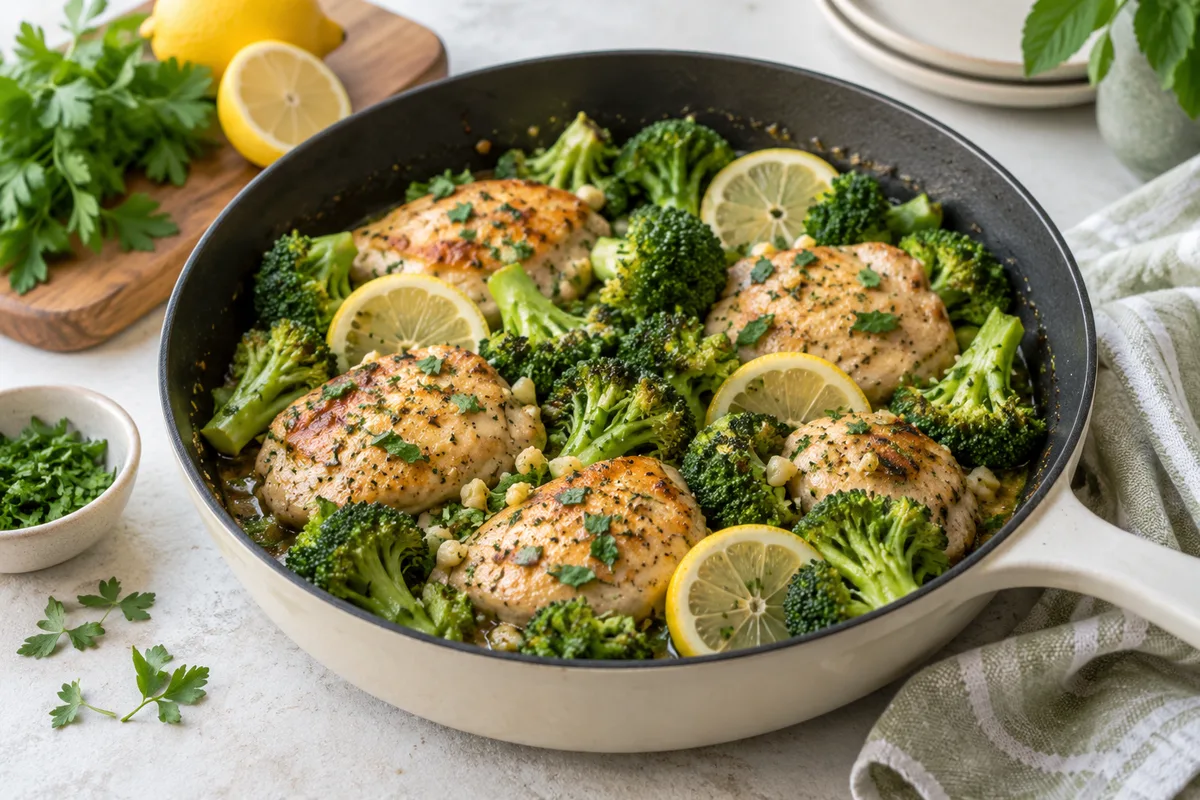
The lemon keeps everything bright. The garlic and dried herbs do the work a heavy sauce would normally do, which means there is no breading, no flour and no sugary glaze in the pan.
It suits a quiet weeknight when you want one pan to wash and a plate that holds its own. Serve it as it is, or add cauliflower rice or a simple salad.
How This Recipe Keeps Blood Pressure in Mind
The point of this dish is not that one skillet of chicken will change your readings. It is that the seasoning stays in your hands rather than in a jar.
Most of the sodium in a meal like this usually arrives through a marinade, a stir-fry sauce or a seasoning packet. Here the flavor comes from lemon, garlic, oregano, thyme, black pepper and parsley, so the amount of salt in the finished pan is whatever you decide to add.
That matters because there is no single sodium number that fits every reader of this site. The American Heart Association suggests no more than 2,300 mg a day for most adults, with an optimal goal of 1,500 mg. That is a population recommendation, not a personal target. Medications, kidney function and other medical considerations all change the picture, and your doctor or dietitian is the one who knows yours.
So this recipe is written to leave room. If you have been given a sodium target, season to it. If you have not been given one, this is a dish you can cook without guessing.
For the wider picture on building meals this way, see low-carb foods that support healthy blood pressure, or the simple low-carb meal plan for high blood pressure if you would rather work from a week at a time.
Choosing Your Ingredients
Chicken
Boneless, skinless chicken breast keeps the skillet lean and light. Cut it into evenly sized pieces so everything finishes at roughly the same time. Strips, bite-sized pieces or small cutlets all work.
Boneless skinless thighs are an equally good choice. They stay moist and are more forgiving if the cooking runs a few minutes long, though they may need that extra time depending on thickness. Either way, check the temperature rather than the clock.
Buy chicken without an added marinade, brine or seasoning mix. Check the label on frozen fillets, where a salt solution is common. For more on this, read Best Protein Sources for Blood Pressure: Check the Sodium.
Broccoli
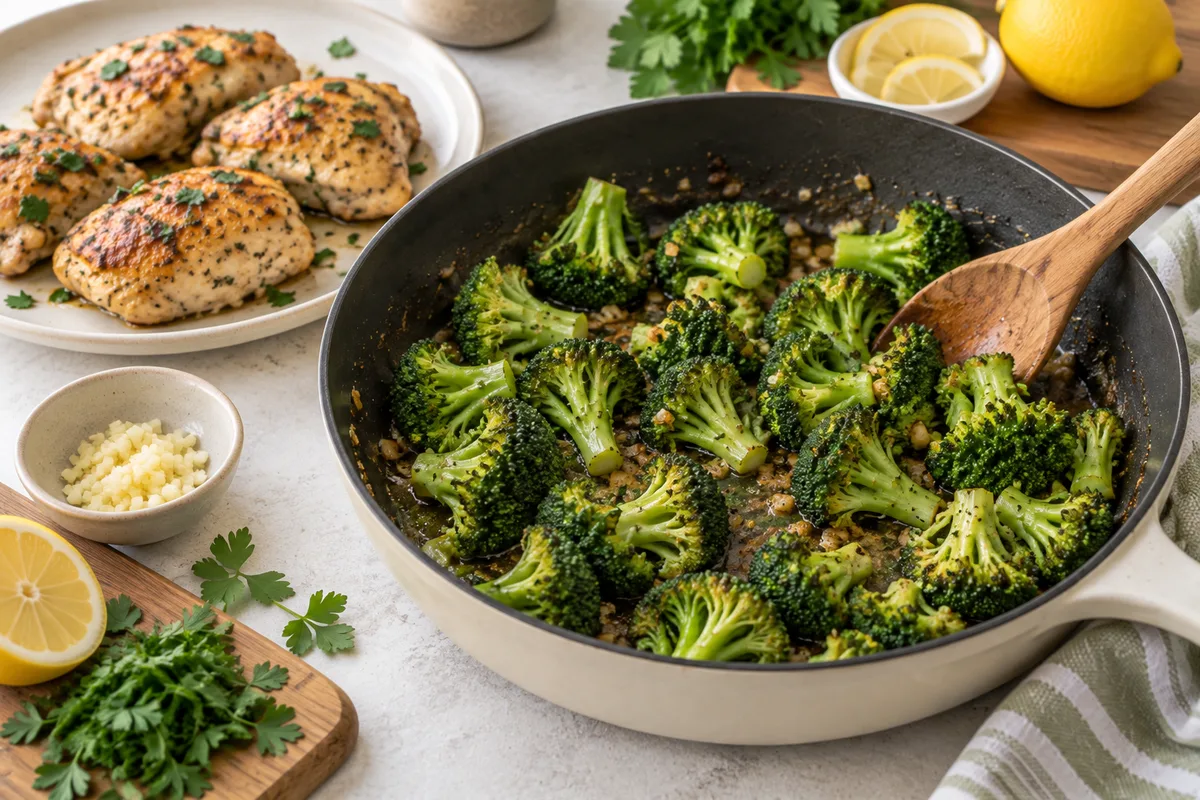
Keep the florets fairly uniform. Very large pieces take much longer to soften than small ones, and you end up with some stems still firm while others have gone soft.
The aim is tender-crisp. Bright green, cooked through, still holding its shape. If you like vegetables like this, low-carb vegetables for blood pressure has more of them.
Garlic, Lemon and Herbs
Fresh garlic carries the savory side of the dish. It goes in near the end and needs about 30 seconds, just long enough to smell of itself. Keep it pale rather than brown.
Lemon does two jobs. The zest carries the fragrance, the juice brightens the finished pan. Dried oregano and thyme hold up well to the heat, and fresh parsley at the end keeps everything from tasting flat.
The Small Details That Make This Skillet Work
Pat the chicken dry before it goes in. Wet chicken steams instead of browning, and the browning is where a lot of the flavor comes from.
Take the chicken out before the broccoli goes in. Everything still uses one pan, but each part gets the heat and the space it needs. The chicken finishes when it returns.
Use a thermometer for the chicken. Poultry needs a safe minimum internal temperature of 165°F (74°C), measured in the thickest part. Thin pieces will get there sooner than the suggested minutes.
Let the water do the steaming. Three tablespoons under a lid is enough to soften the broccoli without leaving a puddle in the pan.
Recipe Notes
No fresh lemon. Bottled lemon juice will carry the flavor, though you lose the zest, which is where most of the fragrance sits.
No oregano. Italian seasoning is a reasonable swap. No parsley? Fresh basil or chives both work at the end.
Frozen broccoli. It works, but the texture will be softer. Do not thaw it first, leave out the 3 tablespoons of water, and cook uncovered until most of the moisture has evaporated before you add the garlic and lemon.
More vegetables. Zucchini, mushrooms, asparagus, bell pepper or spinach all fit. Cook mushrooms and zucchini long enough for their water to evaporate before the chicken goes back in, or the pan turns watery.
More heat. Increase the crushed red pepper a little. It is optional and changes nothing else.
A creamier version. Stir a spoonful of plain Greek yogurt through the pan after you take it off the heat. Do not let it boil or it may separate. This will change the nutrition estimate.
For two. Halve everything and use a smaller skillet.
About the Nutrition Figures
One serving is a quarter of the chicken, a quarter of the broccoli and a quarter of the pan juices. The recipe card below shows the main figures, including about 116 mg of sodium per serving with no salt added. Each serving also works out at about 2 g of saturated fat and about 6.5 g of net carbohydrate.
These are ingredient-based estimates, not laboratory values. They are calculated per ingredient from USDA FoodData Central entries for raw chicken breast, raw broccoli, olive oil, garlic, lemon juice, parsley and the dried herbs, and they assume no added salt and that all of the oil and pan juices are eaten. Lemon zest and the optional red pepper flakes are not included, as both are too small to change the result. Net carbohydrate is total carbohydrate minus fiber. Your own product labels, portion sizes and cooking losses will move these numbers.
One figure worth naming: this dish is naturally high in potassium, at roughly 970 mg per serving, almost all of it from the chicken and the broccoli themselves. For most people that is simply food. If you have been given a potassium limit, or you take a medication that affects potassium, mention a dish like this to your doctor or pharmacist so they can tell you how it fits.
What to Serve With It
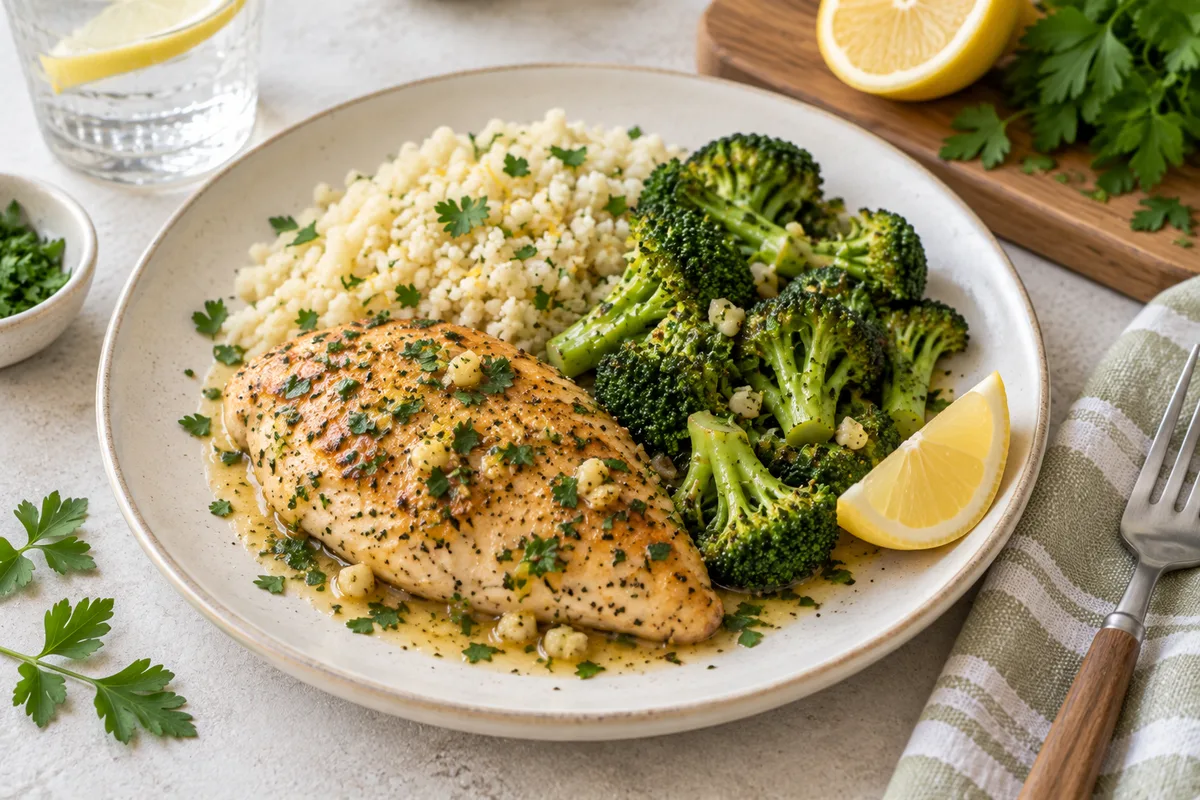
The skillet already has protein and vegetables in it, so it can stand on its own. For a larger plate, add cauliflower rice, zucchini noodles, mashed cauliflower, a cucumber salad, leafy greens or roasted asparagus.
Cauliflower rice is the one I would reach for first, because the lemon and garlic juices have somewhere to go. Cauliflower mash with olive oil and herbs does the same job if you want something softer.
Meal-Prep Tips
Several parts can be done ahead. Cut the broccoli, mix the dried herbs, zest and juice the lemon, and cut the chicken, keeping it covered in the refrigerator until you cook.
Do not leave raw chicken sitting on the counter while you get everything else ready. Take it out when the pan is hot and you are ready for it.
Storing and Reheating Leftovers
Move leftovers into shallow covered containers and refrigerate within two hours of cooking, or within one hour if the room is above 90°F (32°C). Keep the refrigerator at 40°F (4°C) or below. The USDA keeps cooked leftovers to 3 to 4 days in the refrigerator, and leftovers should be reheated to 165°F (74°C).
The broccoli softens a little on reheating, but the lemon and garlic hold up well. Warm it gently in a skillet with a splash of water rather than running it a long time in the microwave, and reheat only the portion you are going to eat.
Frequently Asked Questions
Can I use chicken thighs instead of breasts?
Yes. Substitute an equal weight of boneless, skinless thighs. They stay moist and are forgiving about timing, so they suit anyone who would rather not watch the pan closely. Thicker thighs may need a few extra minutes, and they still need to reach 165°F (74°C) in the thickest part. The nutrition estimate will change, as thighs carry more fat than breast.
Can I use frozen broccoli?
Yes, though it will be softer than fresh. Do not thaw it first. Leave out the 3 tablespoons of water at the start and cook it uncovered until most of the moisture has cooked off, then carry on with the garlic and lemon. Fresh broccoli gives the better tender-crisp texture if you have it.
How do I know the chicken is done without cutting into it?
A food thermometer in the thickest piece is the only reliable way. Poultry is safe at 165°F (74°C). Cutting into a piece works, but you lose the juices, and pale chicken can still be under temperature in the middle.
Can I make this without any salt at all?
Yes, and it was written to work that way. The lemon, garlic, black pepper and herbs carry the dish on their own. If you are used to salting food, expect the first version to taste a little quieter, and let the lemon do more of the work.
A Simple Dinner to Keep in Rotation
Chicken and broccoli is not a new idea. What makes this version worth keeping is that nothing in the pan has been seasoned for you, so it fits whatever guidance you are working to.
For another one-pan dinner, try the garlic butter salmon and asparagus skillet. If you would rather cook something that keeps well for a few days, the low-carb stuffed peppers with ground turkey are built for it. There are more in the recipe archive.
For simple food ideas and everyday habits in one place, try the free 60-second blood pressure check, and the Blood Pressure Support Cheat Sheet comes with it.
This recipe provides general food information, not medical advice. Follow any sodium, potassium or protein limits prescribed by your healthcare professional.
One-Pan Lemon Herb Chicken and Broccoli
Chicken and broccoli cooked in one skillet with garlic, lemon, oregano and thyme. A simple low-carb dinner that leaves the seasoning in your hands.
Ingredients
Instructions
Cook the chicken
-
Season the chicken. Pat the chicken dry and cut it into evenly sized pieces, whether strips, bite-sized pieces or small cutlets. Combine the oregano, thyme, black pepper and the red pepper flakes if you are using them, then sprinkle the mixture over the chicken. Add salt only if it is part of your usual way of eating.
-
Brown the chicken. Heat 1 tablespoon of the olive oil in a large skillet over medium-high heat. Add the chicken in a single layer and cook for about 4 to 5 minutes, then turn and continue cooking until browned. Thicker pieces will need longer. Transfer the chicken to a clean plate. It does not need to be cooked through yet, because it goes back into the pan later.
Cook the broccoli
-
Cook the broccoli. Reduce the heat to medium. Add the remaining tablespoon of olive oil and the broccoli, and cook for about 2 minutes, stirring occasionally. Add the water, cover the skillet, and let the broccoli steam for 3 to 4 minutes, until it is bright green and beginning to soften. You want it tender, not mushy.
-
Add the garlic and lemon. Remove the lid and push the broccoli slightly to one side. Add the minced garlic and cook for about 30 seconds, just until fragrant. Add the lemon zest and 2 tablespoons of the lemon juice, then stir everything together.
Finish and serve
-
Return the chicken. Return the chicken and any juices from the plate to the skillet. Cook for a few more minutes, turning the chicken and broccoli through the lemon and herb mixture. Check the thickest piece with a food thermometer and keep cooking until the chicken reaches 165°F (74°C).
-
Finish the dish. Turn off the heat. Add the remaining tablespoon of lemon juice and the chopped parsley. Taste before making any final seasoning adjustment, then serve with fresh lemon wedges.
Nutrition per serving
Calculated per ingredient from USDA FoodData Central. Values vary with brands and preparation. This is general information, not a personal target - if your doctor has given you a sodium or potassium target, follow that instead.
One-Pan Lemon Herb Chicken and Broccoli, from Low Carb For Blood Pressure, lowcarbforbloodpressure.com/lemon-herb-chicken-broccoli/
General information, not medical advice. Low-carb eating can affect blood pressure and fluid balance, and it can interact with blood pressure medication. Talk to your doctor or pharmacist before making a significant change to how you eat, especially if you take prescribed medication or manage another health condition.