
Articles
Garlic Butter Salmon and Asparagus Skillet
Some evenings, you need dinner to be simple without tasting like you have given up on it. This garlic butter salmon and asparagus skillet brings together pan-seared salmon, tender-crisp asparagus, and a lemon-garlic butter sauce in about 30 minutes.
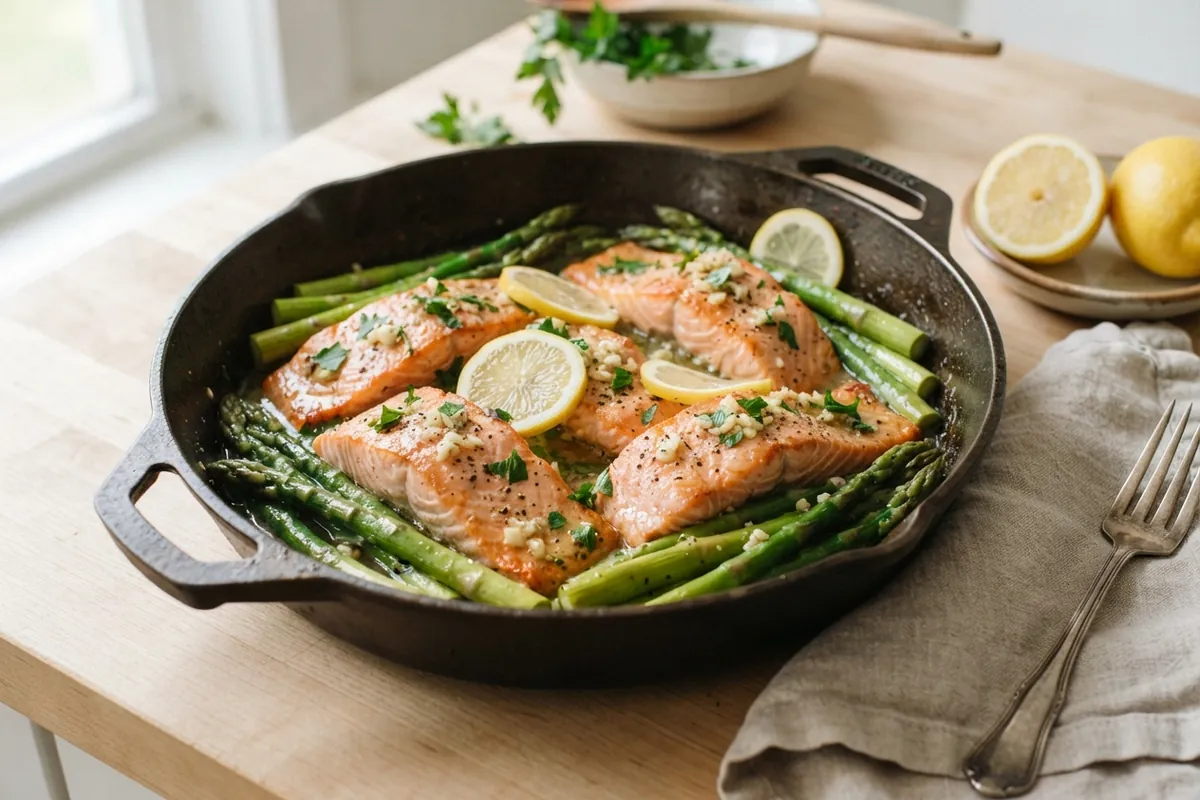
The asparagus and salmon cook in the same pan, one after the other. A small amount of unsalted butter goes in at the end with fresh garlic, lemon, and parsley. There is no cream, bottled sauce, or seasoning packet.
It is a straightforward low-carb dinner built around ordinary ingredients, with no added salt and enough flavor to keep the plate interesting. It suits a quiet weeknight when you are keeping an eye on sodium and want one pan to wash, not three.
How This Recipe Keeps Blood Pressure in Mind
The main consideration here is sodium, not a promise that one serving of salmon will lower your blood pressure. Reducing sodium can help with blood pressure management, but your overall eating pattern and individual medical advice still matter.
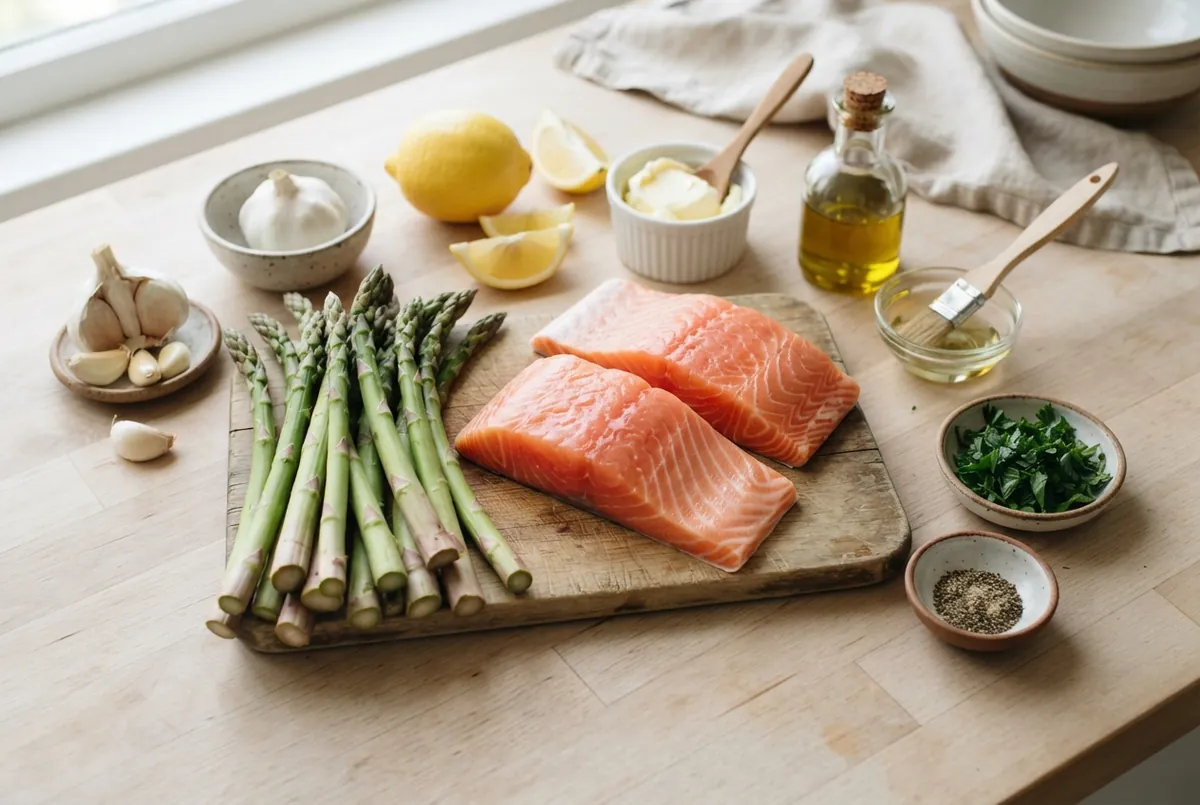
This recipe uses plain salmon, unsalted butter, and water rather than broth. Garlic, lemon zest, lemon juice, and fresh herbs provide the seasoning. Choose salmon without an added marinade, brine, or seasoning mix, and check the package when buying frozen fillets.
No added salt does not mean sodium-free. Salmon naturally contains sodium, and the amount in your finished meal will depend on the fish and other products you use. If your doctor has given you a sodium target, a dish like this leaves you room to season to it.
The butter is there for flavor rather than to form a heavy sauce. One tablespoon is shared across four servings, while olive oil is used for cooking. Replacing some butter with an unsaturated oil such as olive oil is consistent with the American Heart Association's guidance on choosing fats.
For the bigger picture on building meals like this, see low-carb foods that support healthy blood pressure. For more help choosing fish, meat, and other everyday proteins, read Best Protein Sources for Blood Pressure: Check the Sodium.
Choosing Your Ingredients
Salmon
Choose four fillets of similar thickness so they cook at roughly the same pace. This recipe uses portions of about 5 ounces each.
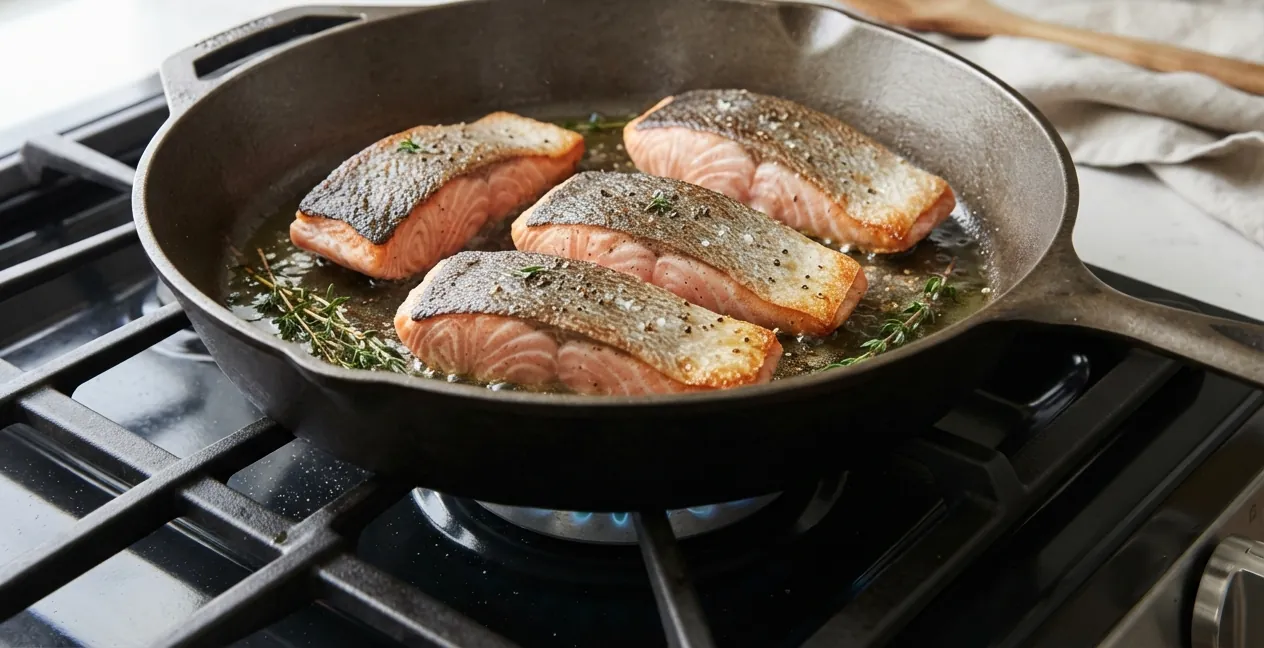
Skin-on fillets work well in the skillet. Start with the skin against the pan, then turn the fish carefully to finish the other side.
Frozen salmon is suitable too. Thaw it in the refrigerator according to the package directions, then pat it dry before cooking.
Asparagus
Use medium-thickness asparagus and trim away the tough, woody ends. Leave the spears whole when they fit comfortably in your pan, or cut them in half crosswise.
The aim is tender-crisp asparagus, not soft spears that fall apart when you move them. Very thin asparagus will need less cooking time than thick stalks. If you want more vegetables like it, see low-carb vegetables for blood pressure.
Unsalted Butter and Olive Oil
Keep the butter for the finishing sauce. The salmon and asparagus cook in olive oil first, so the butter does not have to sit in a hot skillet throughout the cooking process.
Use unsalted butter, not garlic butter from a tub or a pre-seasoned butter blend.
Fresh Garlic, Lemon, and Herbs
Fresh garlic gives the sauce its main savory flavor. Lemon zest adds fragrance, while the juice gives the finished dish a brighter taste.
Parsley keeps the seasoning simple. Fresh dill is another good choice, particularly when you enjoy it with fish.
The Small Details That Make This Skillet Work
Dry the salmon before it goes into the pan. Blot both sides with paper towels, especially after thawing.
Cook the asparagus and salmon separately. Everything still uses one skillet, but each ingredient gets the space and cooking time it needs.
Add the garlic after lowering the heat. It only needs a short time in the melted butter. Keep it pale and fragrant rather than dark brown.
Use temperature, not the clock alone, to check the fish. The safe minimum internal temperature for salmon is 145°F (63°C), measured in the thickest part. Thin fillets may reach that temperature sooner than the suggested cooking time.
Recipe Notes
Keep the sauce light. This makes a small amount of sauce for coating and spooning over the food, not a deep pool. Add another tablespoon of water if the pan becomes dry.
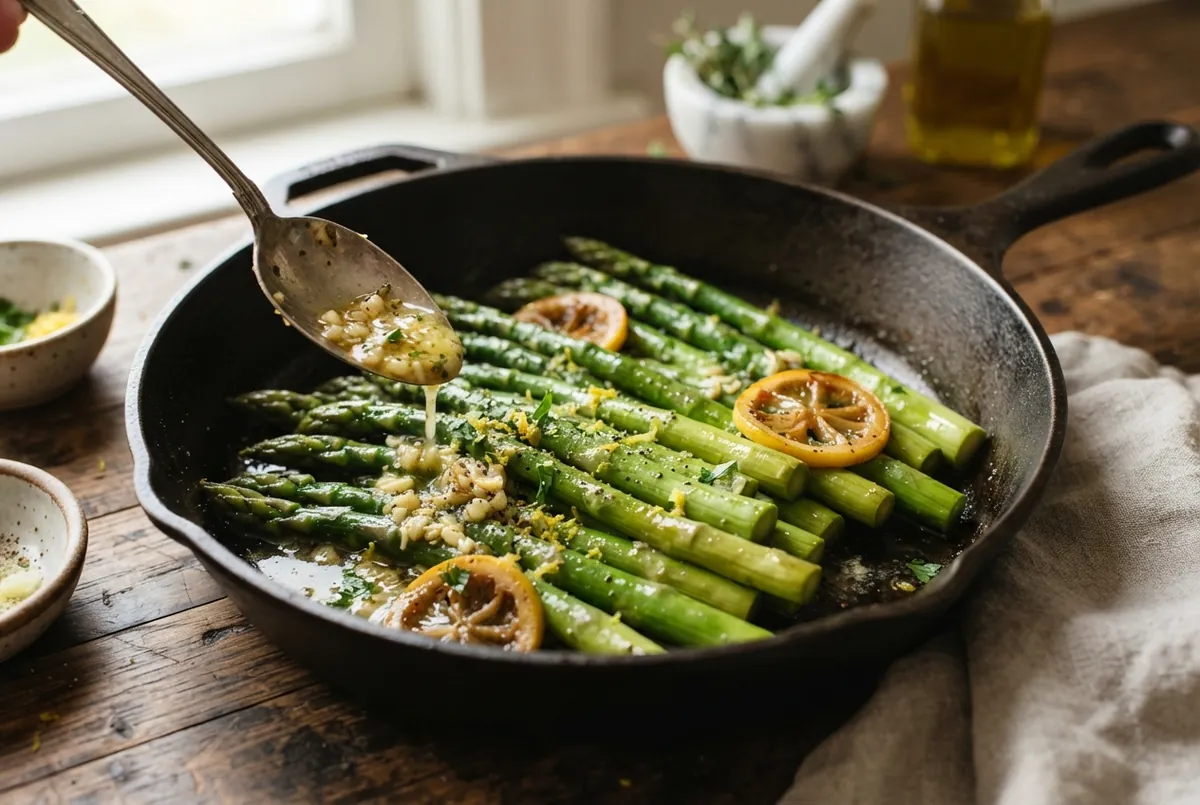
Avoid crowding the fish. The fillets should fit in a single layer with some space between them. Use two batches when necessary, allowing extra cooking time.
For two servings, halve all the ingredients and use a smaller skillet.
For a dairy-free version, replace the butter with 1 tablespoon of olive oil. The result will be a lemon-garlic olive oil sauce rather than a butter sauce, and the nutrition estimate will change slightly.
About the Nutrition Figures
One serving includes one salmon fillet, one-quarter of the asparagus, and one-quarter of the sauce. The recipe card below shows the main figures, including about 90 mg of sodium per serving. Each serving also has about 7 g of saturated fat and about 3.7 g of net carbohydrate.
These are ingredient-based estimates, not laboratory-tested values. They assume approximately 140 g of raw farmed Atlantic salmon per person, no added salt, and that all the oil and sauce are served. USDA food-composition data for salmon and asparagus inform the calculation. Fish type, product labels, portion sizes, and cooking losses will change the result. Net carbohydrate is calculated here by subtracting fiber from total carbohydrate. Optional sides are not included.
What to Serve With It
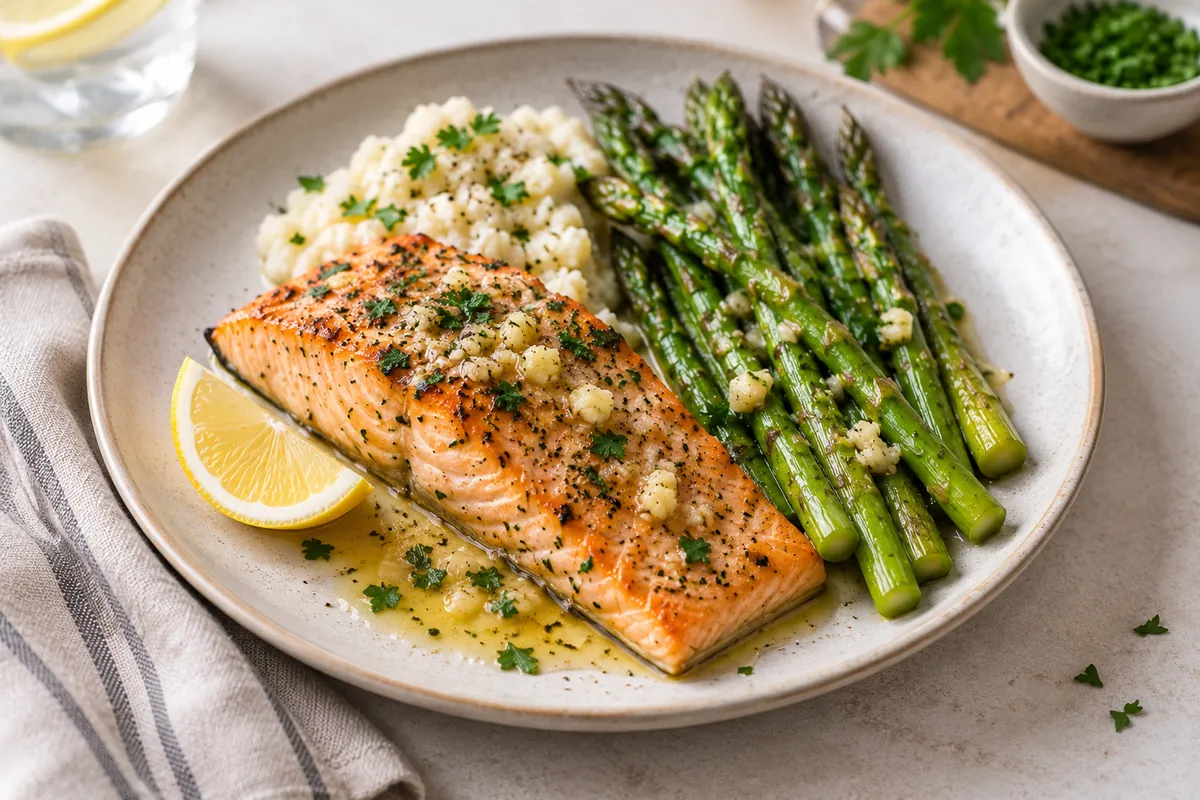
The salmon and asparagus can stand on their own as a lighter dinner. For a larger plate, add cauliflower mash, sautéed cabbage, or a cucumber and avocado salad.
Cauliflower mash with olive oil and herbs is particularly useful for catching the lemon-garlic sauce. Keep its seasoning simple so it does not compete with the fish.
When serving this to a household with different eating preferences, prepare the skillet as written and let everyone choose their own side.
Storing and Reheating Leftovers
Transfer leftovers to shallow, covered containers and refrigerate within two hours of cooking, or within one hour when the temperature is above 90°F (32°C). Keep the refrigerator at 40°F (4°C) or below. Use this dish within three days, which is within the USDA's general three-to-four-day guidance for cooked leftovers.
To reheat, place a portion in a skillet with a small splash of water. Cover and warm over low heat, checking that the center reaches 165°F (74°C). Reheat only the portion you plan to eat.
Frequently Asked Questions
Can I use skinless salmon?
Yes. Place the presentation side, usually the smoother, rounded side, against the pan first. Turn carefully with a broad spatula and check the internal temperature rather than relying on the suggested minutes. Skinless fillets often cook a little faster, so start checking a minute or two early.
Can I use another vegetable instead of asparagus?
Yes. Zucchini cut into thick half-moons is an easy alternative. Cook it uncovered until lightly browned and just tender, then set it aside while you cook the salmon.
Small broccoli florets also work, but they will generally need a longer covered cooking step. These substitutions will change the nutrition estimate.
Can I prepare anything ahead?
Trim the asparagus, mince the garlic, and prepare the lemon and herbs ahead of time. Keep the prepared ingredients covered in the refrigerator until you are ready to cook.
For the best texture, cook the salmon shortly before serving rather than cooking it in advance and reheating the whole dish.
A Simple Dinner to Keep in Rotation
You do not need a complicated sauce to make salmon worth cooking. Fresh garlic, lemon, a little butter, and a pan of asparagus are enough to turn a few ingredients into a proper dinner.
For another easy salmon meal, try the low-carb salmon avocado bowl. For more simple food ideas and everyday habits, try the free 60-second blood pressure check, and the Blood Pressure Support Cheat Sheet comes with it.
This recipe provides general food information, not medical advice. Follow any sodium, potassium, or protein limits prescribed by your healthcare professional.
Garlic Butter Salmon and Asparagus Skillet
Pan-seared salmon and tender-crisp asparagus finished with a light sauce of unsalted butter, fresh garlic, lemon, and parsley. A simple one-pan dinner made without added salt.
Ingredients
Instructions
-
Prepare the ingredients. Trim the asparagus, then wash and dry it. Mince the garlic, zest and juice the lemon, and chop the parsley. Pat the salmon dry with paper towels and season the flesh with 1/4 teaspoon of the black pepper.
-
Cook the asparagus. Heat 1 tablespoon of olive oil in a large 12-inch skillet over medium heat. Add the asparagus and cook for 3 to 4 minutes, turning occasionally. Add 2 tablespoons of the water and cover for 1 to 2 minutes, until the spears are just tender. Thick asparagus may need a little longer; very thin spears may not need the covered step. Uncover, let any remaining water evaporate, and transfer the asparagus to a clean plate.
-
Cook the salmon. Add the remaining tablespoon of olive oil and increase the heat to medium-high. Place the salmon skin-side down in the skillet. Cook for about 4 to 5 minutes, then carefully turn and cook for another 2 to 4 minutes, adjusting the heat if the outside browns too quickly. Check the thickest part of each fillet and keep cooking as needed until it reaches 145°F (63°C). Transfer to a clean plate.
-
Make the garlic butter sauce. Reduce the heat to low and let the skillet cool briefly. Carefully wipe away any blackened bits. Add the butter, then the garlic, and stir for about 30 seconds, just until fragrant. Add the lemon zest, lemon juice, and the remaining 2 tablespoons of water. Stir gently to combine.
-
Bring everything together. Return the asparagus to the skillet and turn it through the sauce for about 30 seconds. Turn off the heat, return the salmon, and spoon a little sauce over the flesh. Scatter over the parsley and the remaining 1/4 teaspoon of black pepper.
-
Serve. Divide the salmon, asparagus, and sauce between four plates and serve immediately.
Nutrition per serving
Calculated per ingredient from USDA FoodData Central. Values vary with brands and preparation. This is general information, not a personal target - if your doctor has given you a sodium or potassium target, follow that instead.
Garlic Butter Salmon and Asparagus Skillet, from Low Carb For Blood Pressure, lowcarbforbloodpressure.com/garlic-butter-salmon-asparagus-skillet/
General information, not medical advice. Low-carb eating can affect blood pressure and fluid balance, and it can interact with blood pressure medication. Talk to your doctor or pharmacist before making a significant change to how you eat, especially if you take prescribed medication or manage another health condition.